
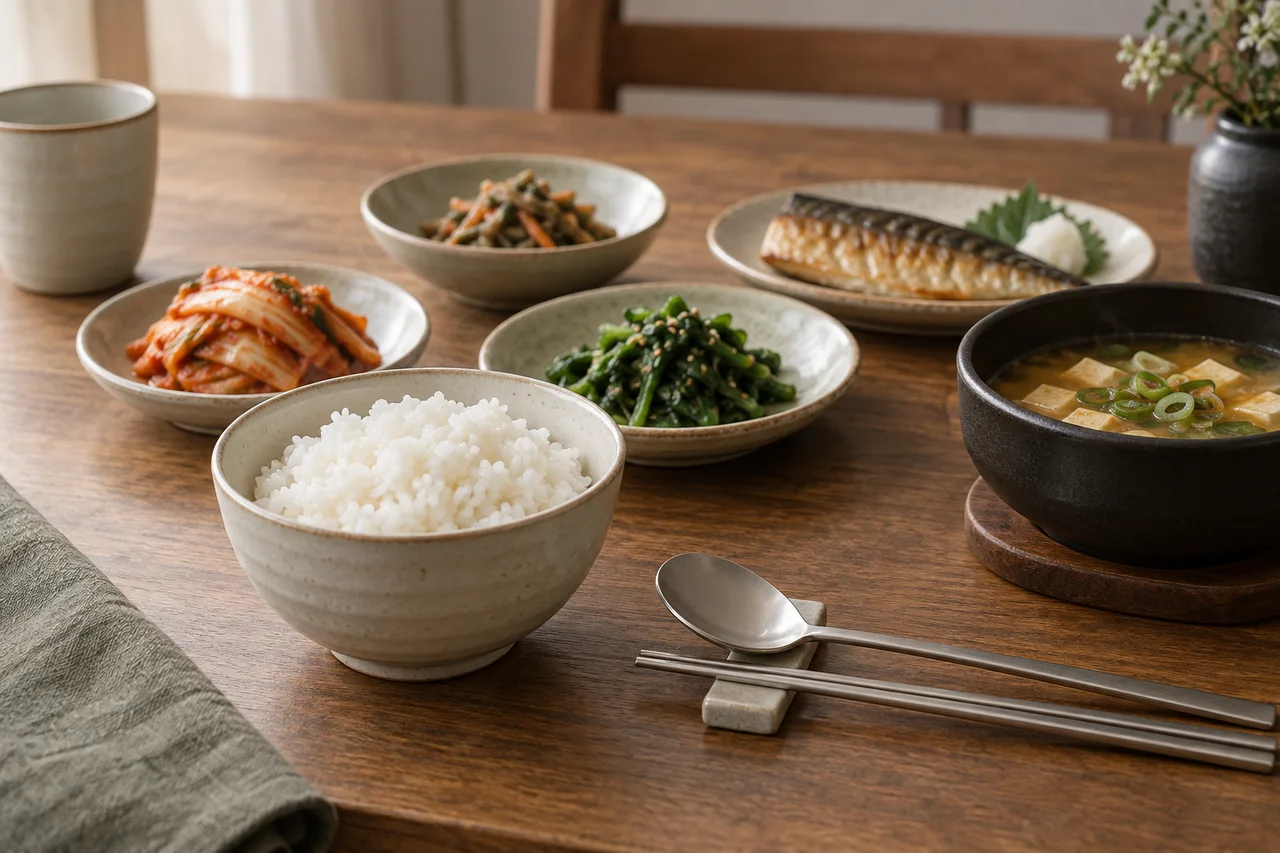
Observe the setting before following a rule list
Etiquette is easier when you notice the place and people rather than memorize an absolute rule for every situation. Homes, traditional accommodation, cafés and formal meals can have different expectations.
A brief question and a willingness to adjust are useful. Visitors do not need to pretend familiarity with every custom, and one person’s preference should not be presented as a rule followed identically by everyone in Korea.
Shoes: check the threshold
Remove shoes when the home, accommodation or floor-seating area requires it. Look for a raised threshold, shoe storage, indoor footwear or the host’s instruction. Do not assume every indoor restaurant requires shoe removal.
Keep the entrance clear and use provided indoor footwear where appropriate. If mobility needs make the arrangement difficult, ask the host for an alternative rather than struggling silently or treating the rule as more important than access.
At the table, choose unobtrusive defaults
Keeping the rice bowl on the table and resting utensils beside the dish are considerate default choices. Avoid standing chopsticks upright in rice. Use provided serving utensils for shared dishes rather than assuming personal utensils should be used.
| Situation | Practical response |
|---|---|
| Shared food | Look for serving tools or ask |
| Unclear payment flow | Check whether to pay at the counter |
| Dietary restriction | Explain clearly and confirm ingredients |
| Formal meal | Observe the host’s pace and guidance |
A custom is not a reason to ignore an allergy or other personal boundary. You can politely decline food or alcohol.
Passing objects and expressing thanks
Using two hands, or supporting the receiving hand, can be a polite choice when giving or receiving something in a formal interaction. A small acknowledgment and a clear thank-you matter more than trying to perform a gesture perfectly.
Do not force drinks on another person or assume everyone drinks alcohol. Respect refusals in the same way you would want your own preference respected.
On public transport
Keep doors and aisles clear, let people exit before boarding and use a low speaking volume. Leave priority seating and designated wheelchair spaces available for people who need them. Do not judge someone else’s need only by appearance.
Ask before photographing identifiable people at close range, especially in spaces where they cannot easily move away. A travel photo is not an entitlement to interrupt daily life.
If you make a mistake
Pause, apologize briefly if needed and follow the correction. A long embarrassed explanation can create more disruption than the original mistake. For a language barrier, use the communication guide.
The aim is consideration rather than a perfect performance: watch the setting, avoid blocking or pressuring others, and ask when the practical next step is unclear.
The header is an AI-generated editorial illustration, not an actual interface screenshot or an on-location report.