
A safe workflow
- Search for an interface with a similar information density or interaction model.
- Read the full analysis instead of copying the first color palette you see.
- Identify transferable principles: hierarchy, spacing, navigation, form behavior, and responsive layout.
- Replace brand-specific colors, logos, imagery, product names, and copy.
- Merge the adapted rules into your own root
DESIGN.md. - Ask the coding agent to use existing components and explain deviations.
- Test the result on mobile, keyboard navigation, and high zoom.
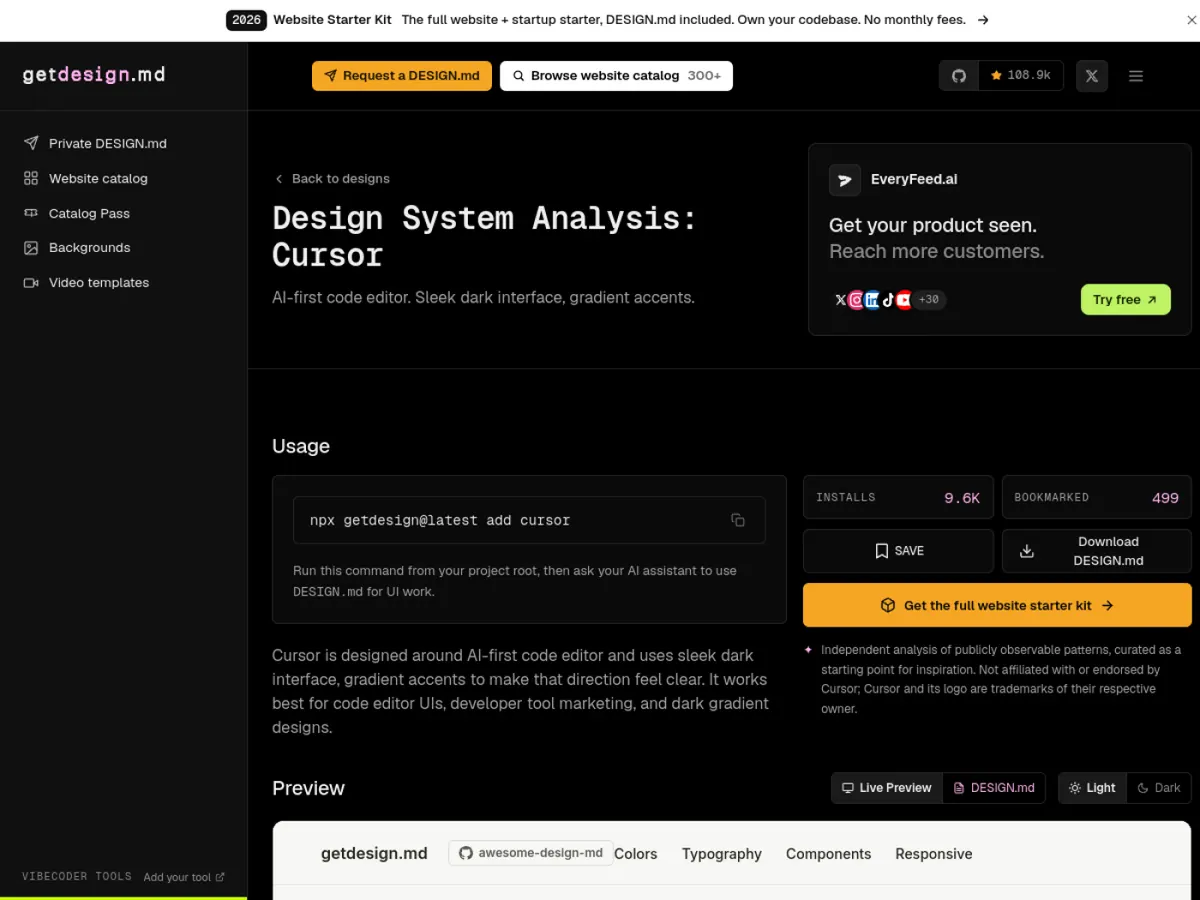
What not to copy
Do not reproduce a company’s logo, illustrations, photos, trademarked shapes, marketing copy, or a distinctive page pixel for pixel. A public interface can inform general design decisions, but it is not a free asset pack.
Turning a reference into your own system
Translate observations into semantic rules. Instead of storing “use this brand’s blue,” define a primary action color that meets contrast requirements. Instead of copying exact card dimensions, document the content hierarchy and the minimum space each card needs.
The finished DESIGN.md should describe your product, not the reference site.
When a reference is a poor fit
A visually attractive marketing page may be a bad reference for a dense dashboard, and a desktop-first product may not provide enough guidance for mobile. Choose references based on function, audience, and content structure before visual similarity.
What getdesign.md provides
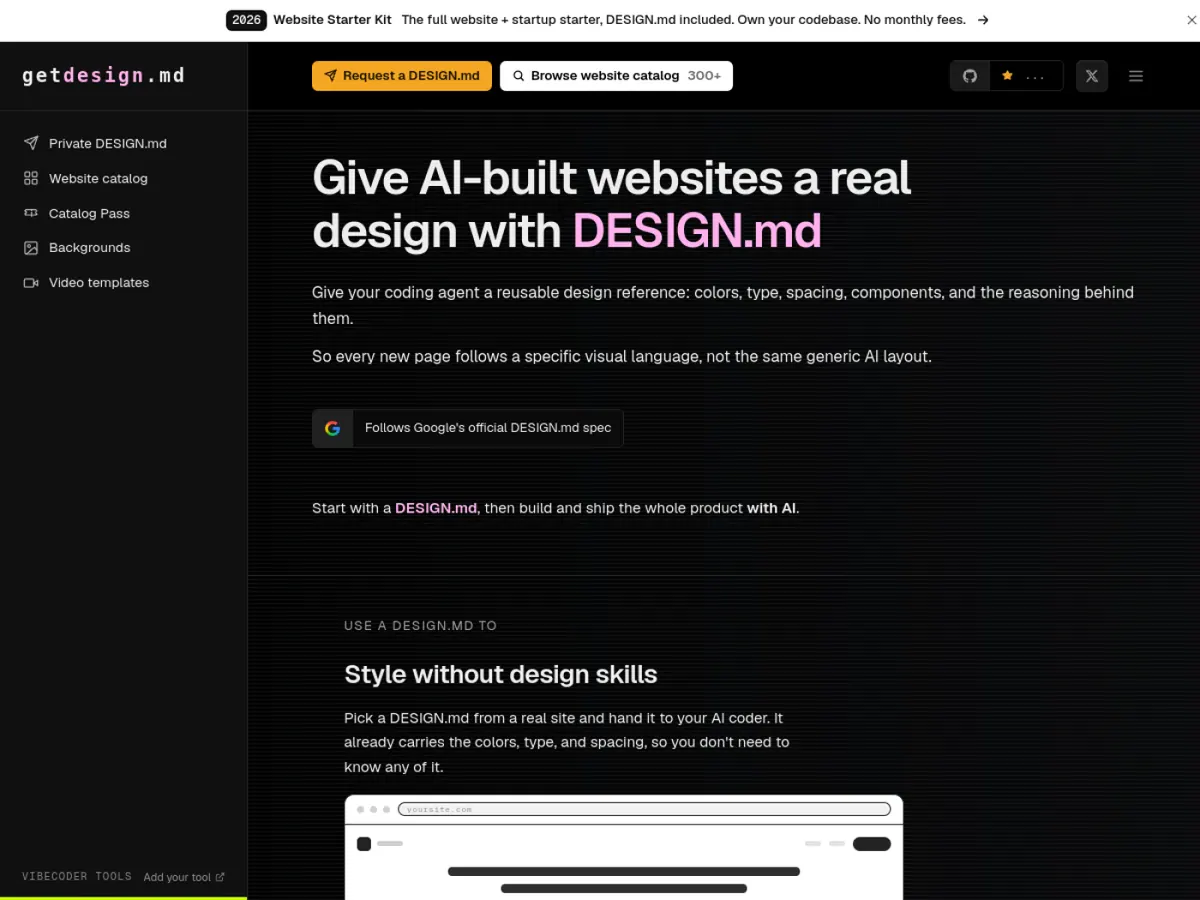
getdesign.md is a catalog for exploring interface analyses written as DESIGN.md. A reference may describe color roles, typography, spacing, components, layout patterns, responsive behavior, and prompts that help an AI coding tool interpret the system.
The site saves time when you know the type of interface you want but do not yet have a mature design system.
How it differs from DESIGN.md
DESIGN.md is the document that lives in your project. getdesign.md is a discovery service. You can use the format without getdesign.md, and you can browse getdesign.md without installing a package.