
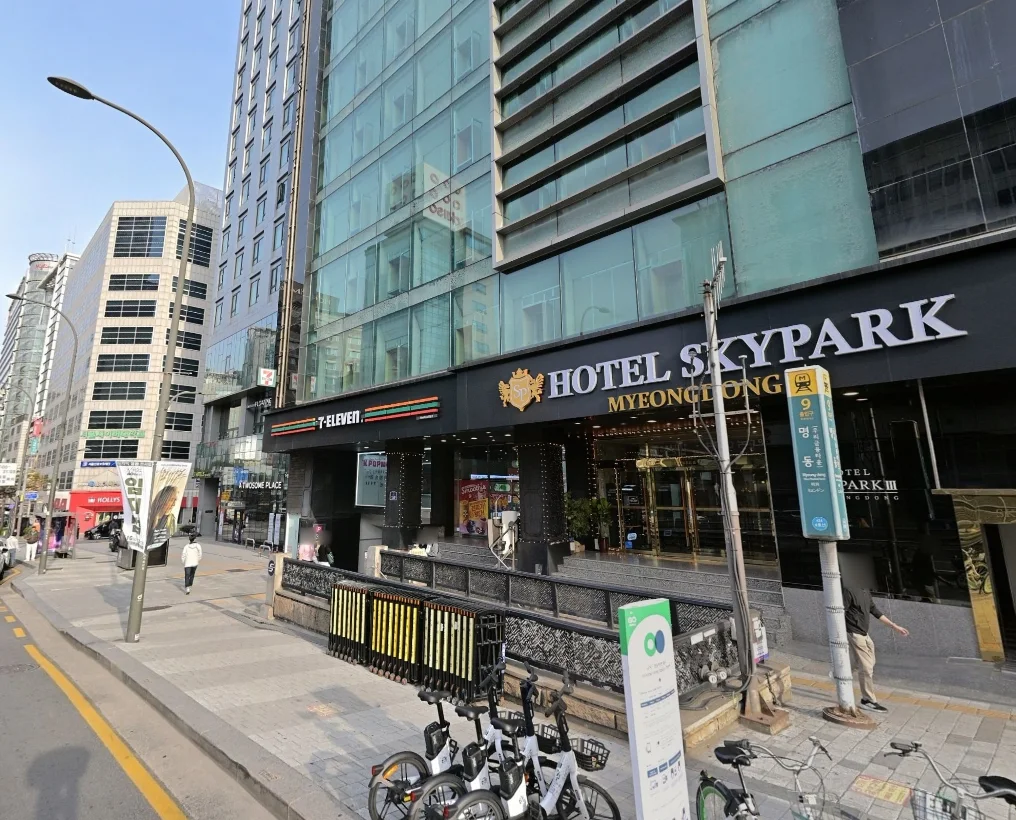
Myeongdong is the district; Myeongdong Station is Line 4
A hotel called “Myeongdong” is not necessarily beside 명동역 / Myeongdong Station. Start with the actual building address. That small check can save you from taking a suitcase across a busy road or through several shopping streets.
Myeongdong Station is on Line 4. Euljiro 1-ga is a different station on Line 2, serving another side of the wider shopping district. A map search for the neighborhood can suggest either; the station name and line number on your route are what matter.
Station layout: exits, floors and elevators
The official Line 4 diagram shows Exits 1–10, the concourses and the B3 platform. Use its elevator and toilet symbols to check your route with luggage.
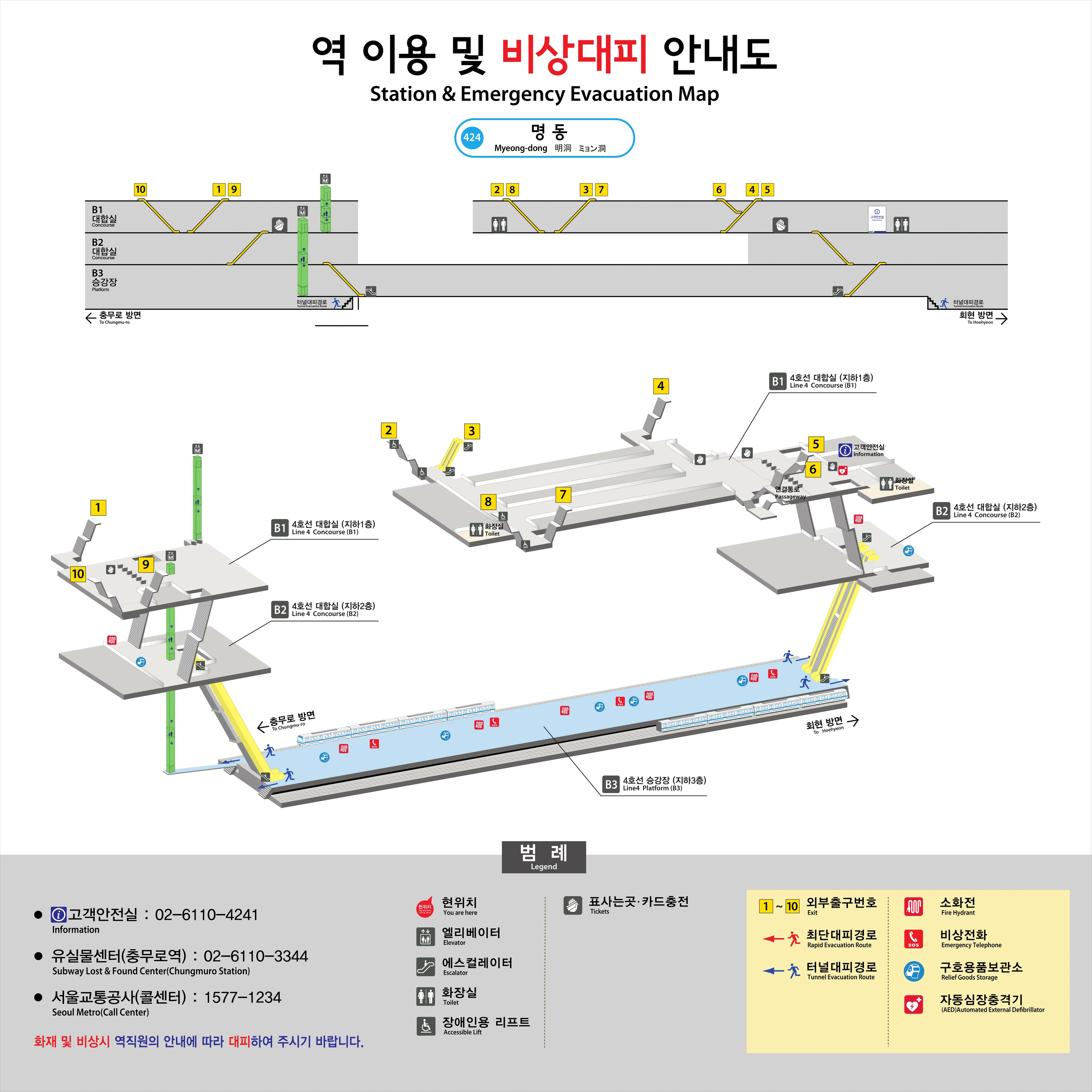
Open the full-size station map ↗
“You are here” marks the original sign location, not your live position. Follow current signs and staff instructions; use a live journey planner for train times.
Exit 6 for shopping, your address for the hotel
Visit Seoul’s district guide directs visitors via Line 4, Exit 6. It is a helpful starting point for the main shopping area, not a promise that every hotel, café or theater is right outside.
| Your plan | Start with | Avoid |
|---|---|---|
| Walk through Myeongdong’s shopping streets | Exit 6 and the destination pin | Treating the whole district as one building |
| Drop bags at a hotel | Its Korean street address | Picking an exit from the hotel’s marketing name |
| Collect stored luggage | The exact storage counter and pickup time | Assuming every storage service is next to Exit 6 |
| Meet friends | A specific exit and surface landmark | “Meet at Myeongdong” without a location |
Check the road crossing as well as the distance. A nearby exit on the wrong side of the road can be less convenient than a slightly longer underground route. With heavy luggage, ask for the elevator route rather than assuming the recommended numbered exit is step-free.
Coming from Seoul Station or the airport
Myeongdong and Seoul Station are connected by Line 4. From Seoul Station, follow Line 4 signs and confirm Myeongdong on the platform’s direction diagram. If you arrived on AREX, you still need the transfer through Seoul Station; stepping off the airport train does not put you on the Line 4 platform.
Use the Seoul Station transfer guide before a first arrival with luggage. Keep enough time for the indoor walk, especially if you depend on lifts. Do not follow KTX signs when the next leg is a subway journey.
For an airport trip, check the airport name and full connection in a live journey planner. A service leaving the neighborhood is not automatically going to the terminal on your booking.
Bags: the counter is not the same as a locker
Seoul’s official storage guide lists T-Luggage on B1 near Exits 9 and 10 at Myeongdong Station. This is a staffed service rather than a self-service locker.
Confirm the current counter hours, price, bag size and pickup cutoff before leaving belongings. Photograph your receipt or save the confirmation, and allow enough time to return before your onward train. Avoid planning an evening around the assumption that station opening hours and a staffed counter’s hours are identical.
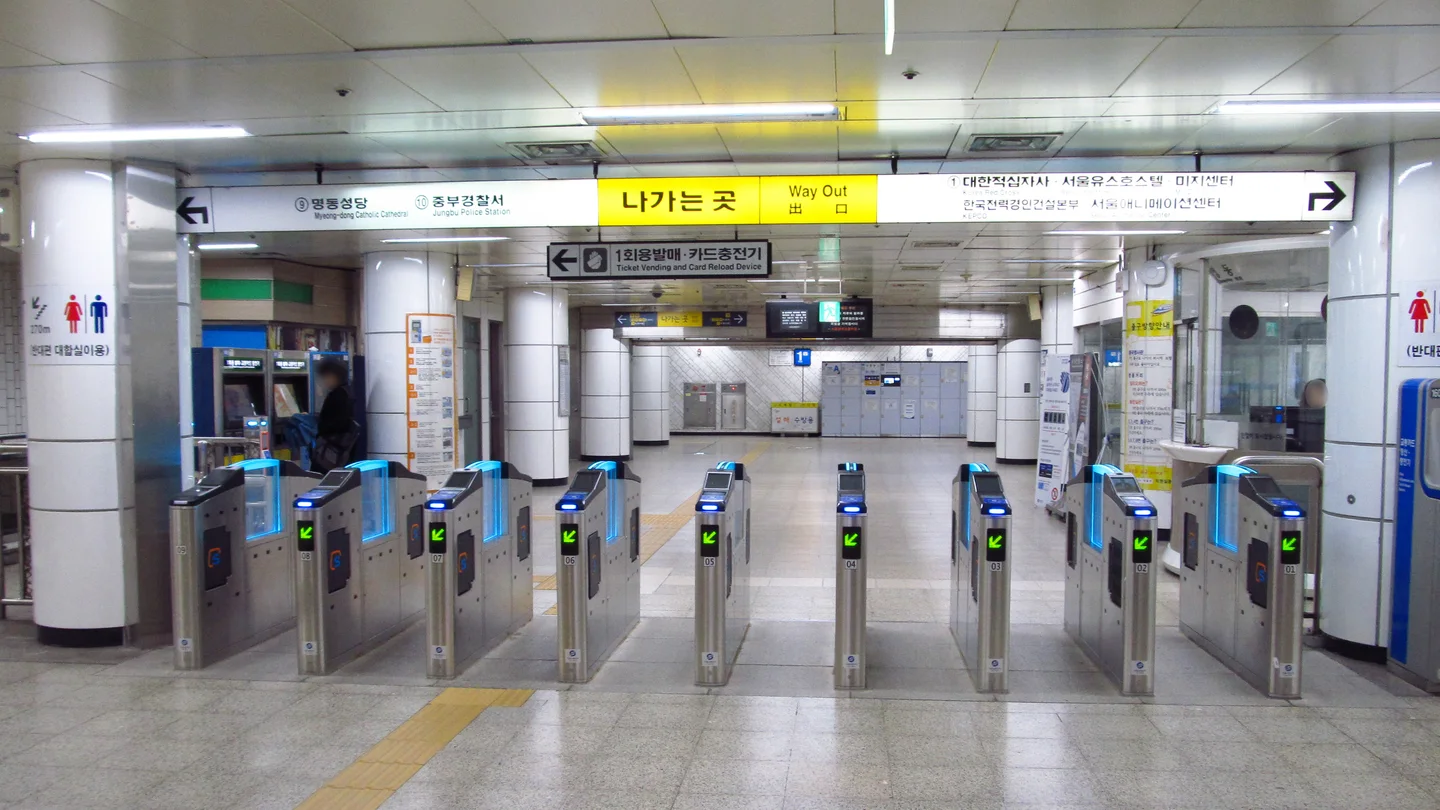
The station-gate photo below was taken in November 2018; check the map and current signs for today’s facilities.
Toilets, lifts and getting help
Read the station’s facility diagram for the zone you are in. Toilets and elevators are separate symbols; a route to a numbered street exit does not guarantee either. Ask staff whether the nearest toilet is inside or outside the gates before tapping out purely to look for one.
You can show 화장실 어디예요? for “Where is the toilet?” or 엘리베이터 어디예요? for “Where is the elevator?” There is no need to deliver a perfect sentence—showing the Korean words and pointing to your suitcase often makes the question clear.
The last walk is worth checking
Save the hotel’s Korean name, street address and entrance photo before departure. Use the NAVER Map guide to compare the walking route with the signs overhead. If friends are waiting on a different side of the road, send your actual exit number rather than wandering until you find them.
Before heading back, check your station name, line and last departure. If your shopping bags have multiplied, look for the elevator route instead of retracing a staircase you used on the way in.
Lost property and useful phone numbers
If you have just left something on a train, tell station staff immediately. Have the direction, approximate time, carriage or door position and a description of the item ready. Chungmuro’s lost-property centre handles Line 4 enquiries.
| Who to contact | Phone in Korea |
|---|---|
| Line 4 lost property · Chungmuro | 02-6110-3344 |
Numbers checked against operator publications on 6 October 2026: Metro centres.
Seoul Metro’s lost-property centres for Lines 1–8 open Monday–Friday, 09:00–18:00, excluding public holidays. Call before travelling to a centre; recently found items may still be at a station. Have the line, time and item description ready when calling, as English-language assistance varies by operator.
These are domestic dialling numbers. From overseas, add +82 and omit the leading zero from a normal 02/031/032 number. Korean 15xx/16xx service numbers may not connect internationally. Registered items can also be searched on the police lost-property portal.