
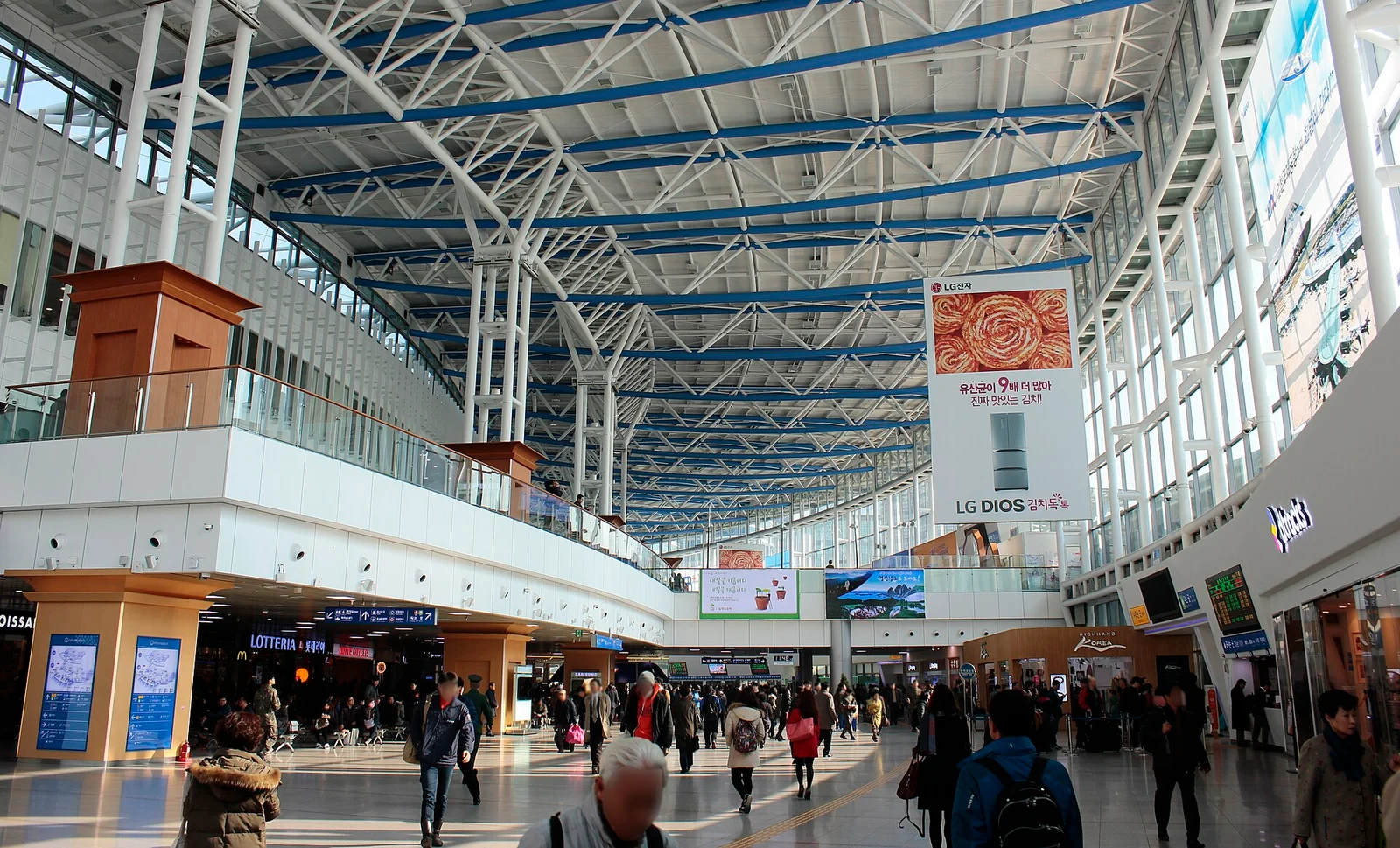
Seoul Station is several stations joined together
The name Seoul Station covers a large connected complex rather than one compact hall. It contains the above-ground KORAIL main station for KTX and conventional trains, the deep underground AREX airport-railroad station, Seoul Subway Lines 1 and 4, and a separate Gyeongui–Jungang Line service area. A sign saying “Seoul Station” therefore does not prove that you are already near your train.
Start with the operator, then the line or service, and only then the platform or exit number. Exit numbers can appear in different parts of the complex. If you follow “Exit 1” without checking the operator or line color, you can walk to the wrong side of the station.
| Your trip | Follow these signs | Final check |
|---|---|---|
| KTX or another intercity train | KORAIL, KTX, Train / 타는 곳 | Train number, destination and platform on the departure board |
| Incheon or Gimpo Airport | Airport Railroad / AREX / 공항철도 | Express Train or All-Stop Train, then airport terminal |
| City Hall, Jongno or eastern Seoul | Dark-blue Line 1 / 1호선 | Direction and destination shown on the platform |
| Myeongdong, Dongdaemun or southern Line 4 | Light-blue Line 4 / 4호선 | Direction and destination shown on the platform |
| Gyeongui–Jungang Line | 경의중앙선 | Confirm that the specific train serves Seoul Station |
The Gyeongui–Jungang Line service at Seoul Station is not interchangeable with every train on the wider line. Check the exact destination and departure in a live journey planner or on the station board.
Official Line 1 station map
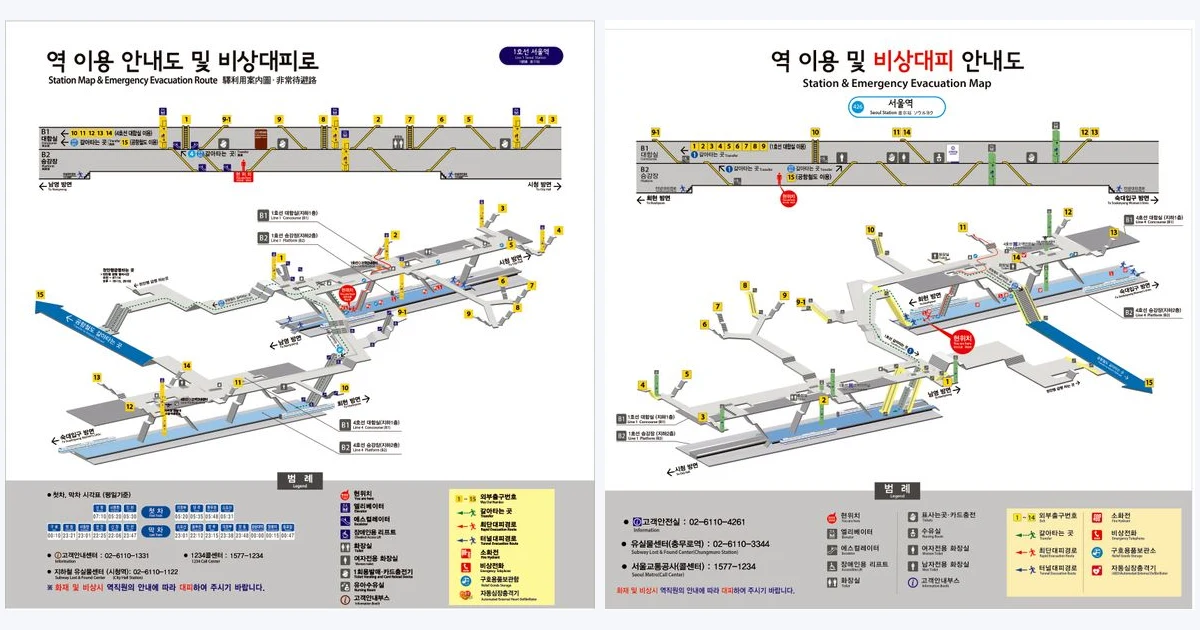
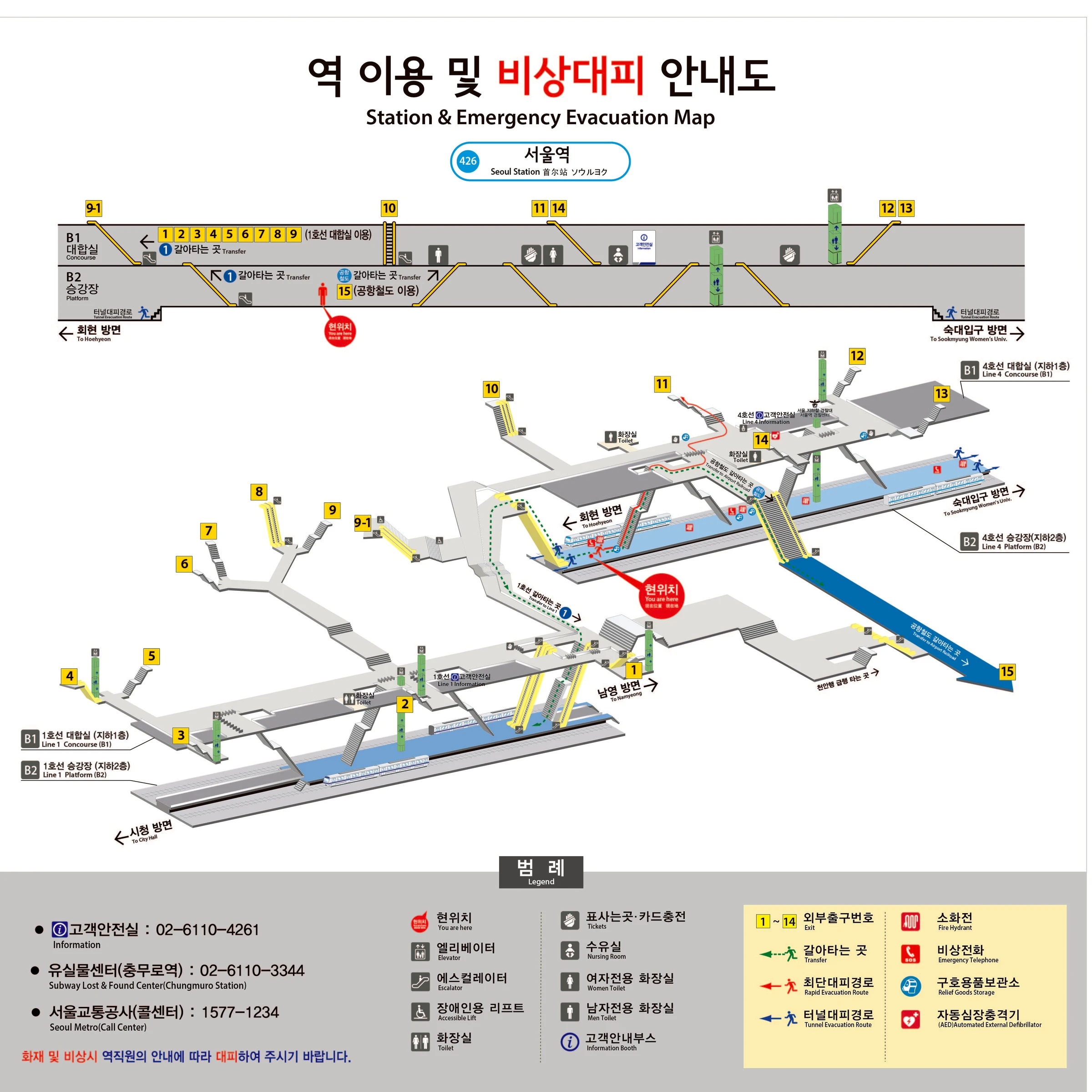
These official Line 1 and Line 4 maps date from 30 June 2024. Seoul Open Data Plaza marked the source dataset as ended on 7 September 2026 (checked 26 September). Use the maps to understand the layout, then follow current signs for access, toilets and elevators.
This map shows the Line 1 concourse on B1, platforms on B2, exits 1–15, the Line 4 transfer passage, the AREX transfer route and facility symbols. Toilets are marked with the male/female icon; elevators, escalators and accessible lifts have separate symbols in the legend.
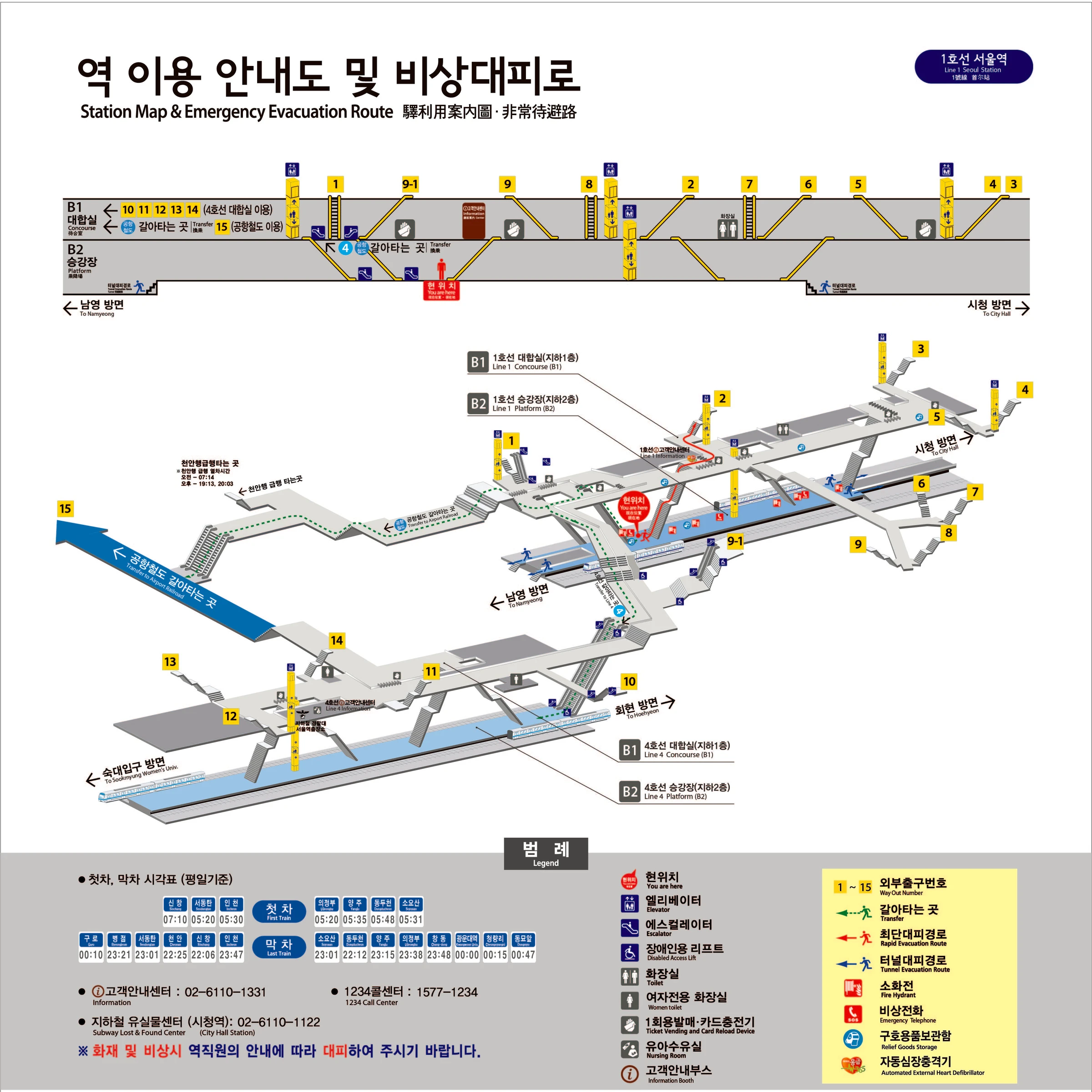
The map is most useful after you identify your present level. The red You are here marker printed on a station map only applies to the physical board from which the original diagram was designed; it is not your phone’s live position.
Official Line 4 station map
The Line 4 map shows its B1 concourse and B2 platforms, exits 1–14, toilets near the concourse passages, elevators, the Line 1 connection and the large AREX transfer route toward Exit 15.
Some routes that look close on a diagram involve a level change and a long corridor. Follow the colored transfer signs continuously. Do not go through an exit gate merely because an outdoor exit number appears close to your destination.
Where to find a toilet
There is no single “Seoul Station toilet” for the entire complex. The practical choice depends on which operator zone and ticket-gate side you are already in.
| Where you are | Best approach |
|---|---|
| KORAIL/KTX main concourse | Follow the restroom symbol in the main public concourse before going to your platform. Ask the KORAIL information desk if the closest route is unclear. |
| Subway Line 1 | Match your level and exit area to the Line 1 map above. Toilet icons appear on the B1 concourse. |
| Subway Line 4 | Use the Line 4 map; toilet icons are shown along the B1 concourse passages. |
| AREX | Follow AREX’s own facility signs or ask its customer center. The operator lists three accessible toilets in the AREX station area. |
| During a transfer | Use a toilet in your current zone before beginning a long corridor or crossing a gate, especially with children or luggage. |
Useful Korean is 화장실 어디예요? (hwajangsil eodiyeyo?), meaning “Where is the toilet?” Showing the word 화장실 to a member of staff is enough if pronunciation is difficult. Gate-side arrangements can change, so the signs at your current location are more reliable than an old blog photo.
Key facilities at a glance
Facilities belong to different operators. Numbers published by AREX describe the AREX Seoul Station area, not the whole Seoul Station complex.
| Facility | What to know |
|---|---|
| Elevators and escalators | The official subway maps mark lifts and escalators. AREX currently lists 10 elevators, 19 escalators and four moving walks in its station area. Use the elevator route with a suitcase or stroller. |
| Accessible toilets | AREX lists three accessible toilets. Subway accessible lifts and toilets are marked separately on the official Line 1 and Line 4 maps. |
| Lockers and luggage service | AREX lists lockers. Seoul’s official storage guide locates T-Luggage on B1 near Exit 1; capacity and operating hours can change. |
| ATM | The current AREX facilities table does not confirm an ATM location. Ask station staff for the nearest machine; foreign-card support and fees depend on the machine and issuer. |
| Information and ticketing | Each operator has its own customer or ticket counter. Ask the counter belonging to the service you will board. |
| Wheelchair support | AREX lists a rapid wheelchair charger on B3. For boarding assistance, contact the relevant operator before travel when possible. |
| AED and emergency equipment | AREX lists five AEDs in its zone; the subway maps also mark emergency equipment. Follow staff instructions in an emergency. |
Lockers may be full during weekends and holidays. Do not build a tight itinerary around finding an empty locker after arrival. If luggage storage is essential, confirm the current service and hours before traveling.
AREX to KTX: a vertical transfer
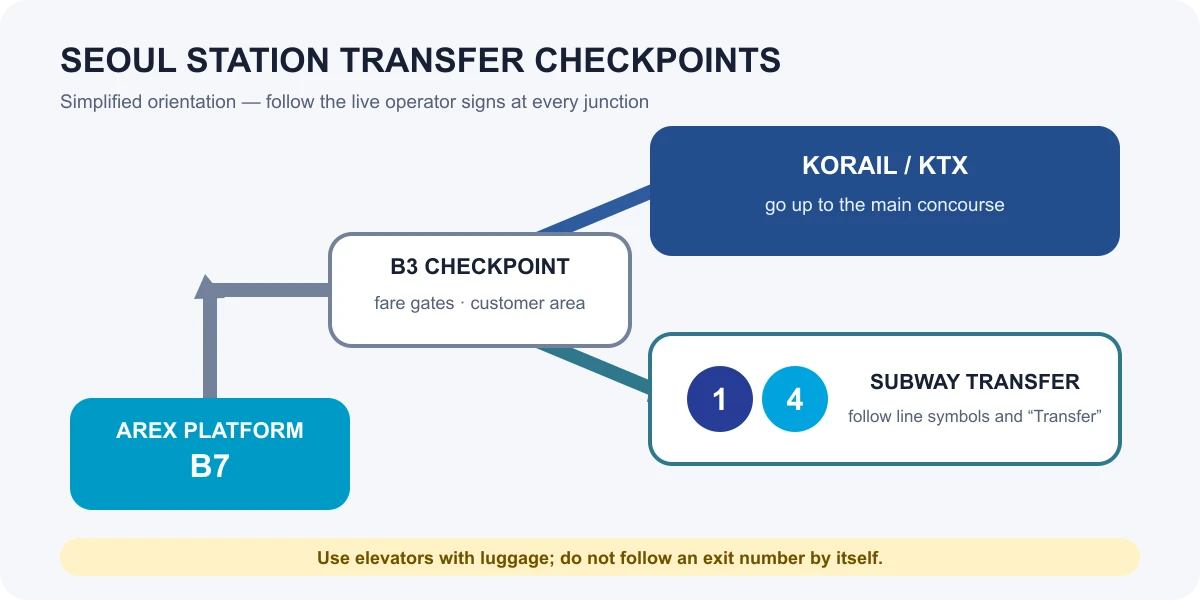
AREX platforms are deep underground—AREX identifies the platform level as B7—while the KTX concourse is above ground. The transfer therefore involves several levels, escalators or lifts, and a walk through the connected station. A route that appears to be “inside Seoul Station” can still take meaningful time with a large suitcase.
The following diagram is a simplified set of checkpoints, not a scale map. At B3, make a deliberate choice between KORAIL/KTX and the Subway Line 1/4 transfer; do not continue behind the person in front of you without reading the next sign.
AREX publishes official indoor Street View links for the key levels. Use them before travel to rehearse the vertical route and recognize the lift, corridor and gate area:
| Level | What to recognize | Official visual check |
|---|---|---|
| B7 | AREX platform and the first elevator/escalator decision | Open B7 Street View |
| B6 | Intermediate vertical-transfer area | Open B6 Street View |
| B3 | Fare gates and the junction where operator signs matter | Open B3 Street View |
| B2 | Lift and corridor area toward the connected station | Open B2 Street View |
| 1F | Street-level AREX entrance and connection orientation | Open 1F Street View |
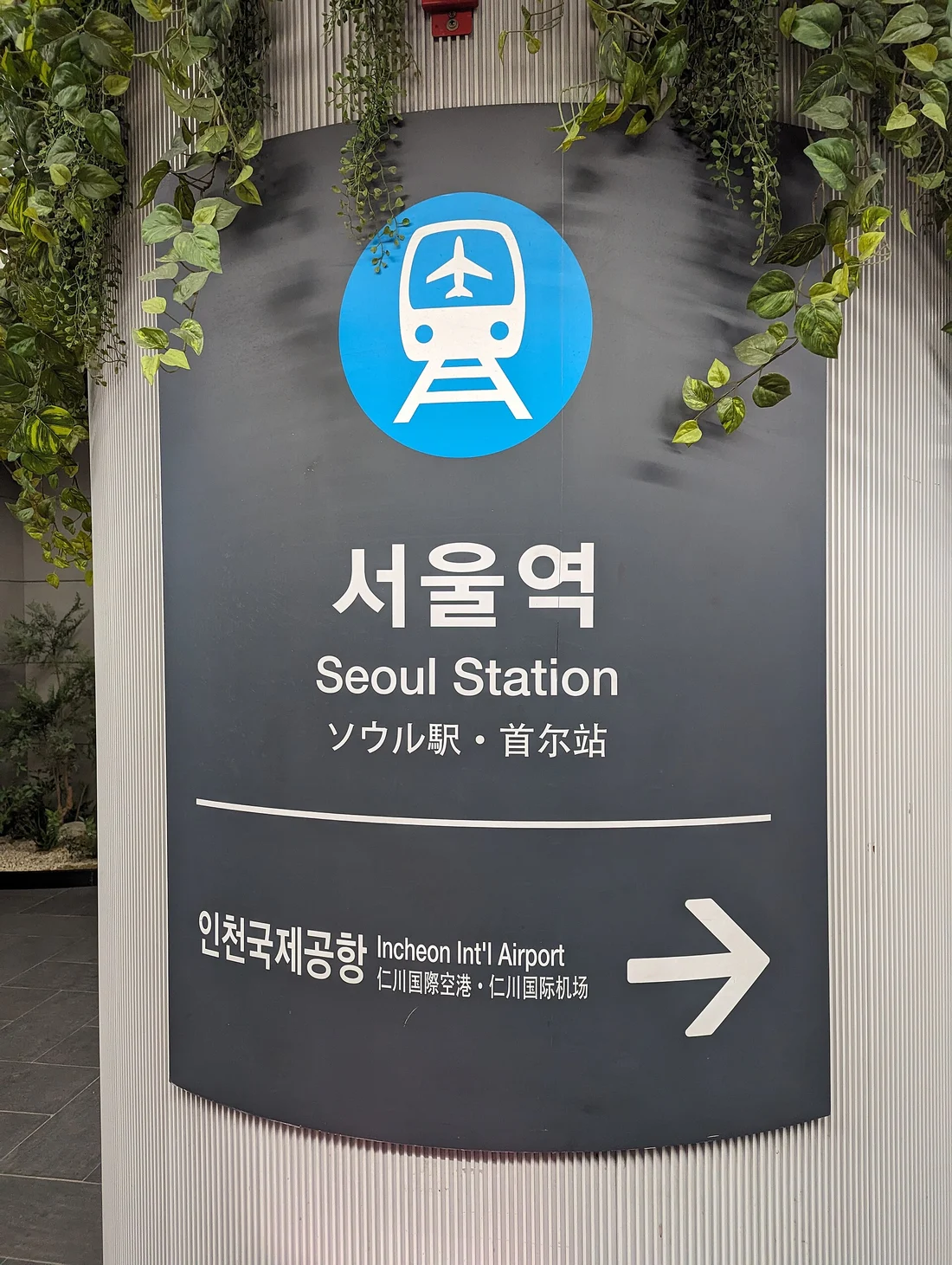
- Leave the AREX train and follow KTX / KORAIL / Seoul Station signs, not a numbered subway exit.
- If you have heavy luggage, keep following the elevator symbol even when the escalator route looks shorter.
- Enter the KORAIL main concourse and locate the large departure board.
- Match the train number and destination on your ticket; the platform may be announced closer to departure.
- Use the restroom and buy food before entering the platform area if time permits.
AREX operates both Express and All-Stop services. Confirm the train type and airport terminal when traveling in the opposite direction. Timetables and fares change, so check the official AREX or Seoul information on the day rather than relying on a screenshot from an older trip.
KTX to Subway Lines 1 or 4
From the KORAIL concourse, follow Subway / 지하철 and then the numbered line color. Do not follow AREX merely because it also leads underground. Line 1 is dark blue; Line 4 is light blue.
Before tapping through a subway gate, confirm the direction shown beneath the line number. A platform direction is more useful than the name of a famous stop because the same line branches or continues far beyond central Seoul. For the final route, use NAVER Map’s Korean transit directions and compare the station exit with the Korean address of your destination.
If you need to buy or reload a transit card, see the Korea card, cash and transit payment guide. A foreign bank card may work at one machine and fail at another, so keep a modest cash or alternate-card backup.
Line 1 to Line 4 transfer
The two Seoul Metro lines connect inside the paid area. Follow the transfer symbol and the color/number of the next line. The official maps show the transfer corridor in green. Stairs, escalators and accessible routes are not always identical, so travelers with luggage should follow elevator signage even if it diverges from the fastest walking route.
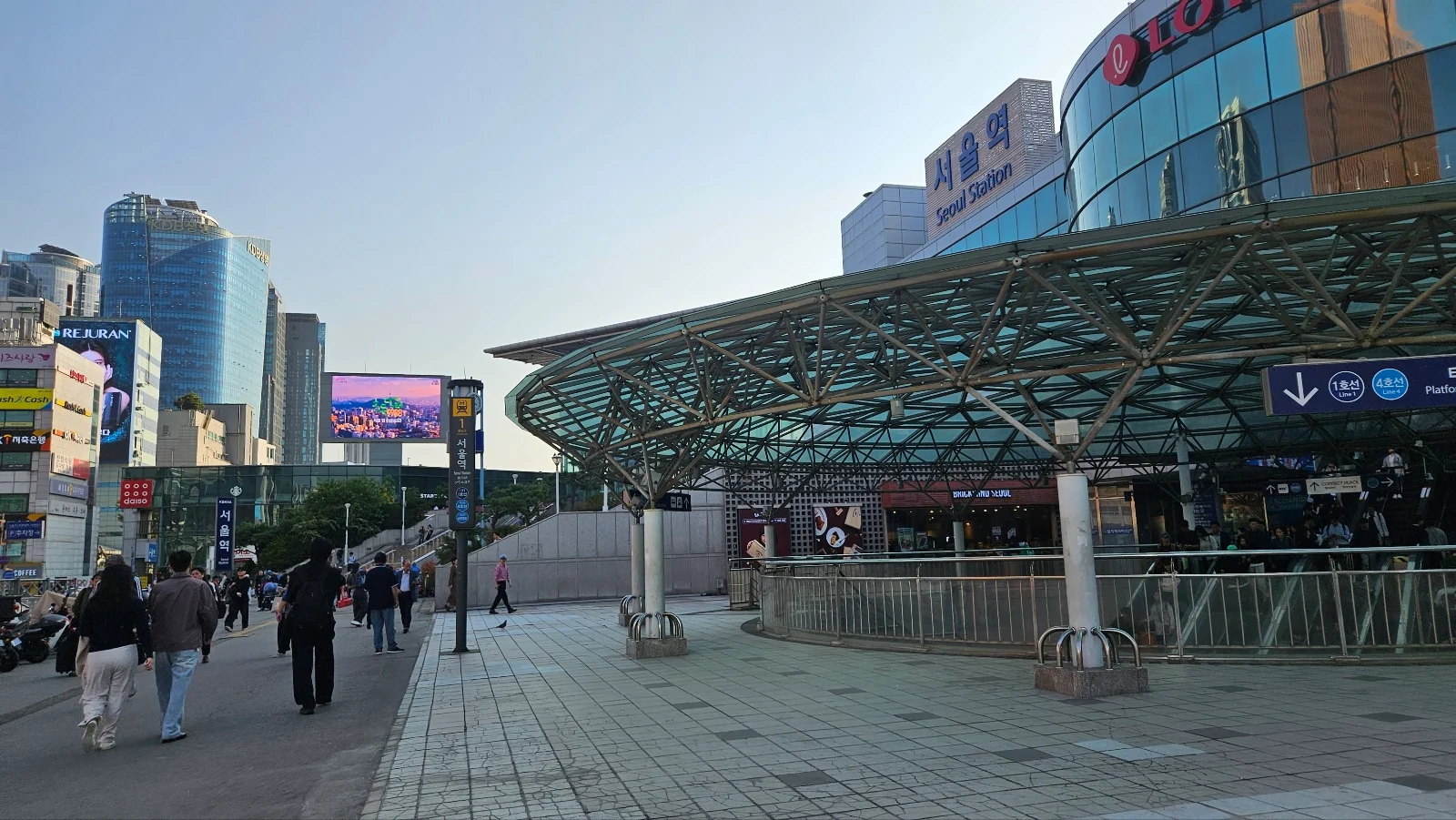
At the destination platform, verify both the line number and direction before boarding. “Seoul Station” is the transfer point, not the direction of travel.
Choosing the correct street exit
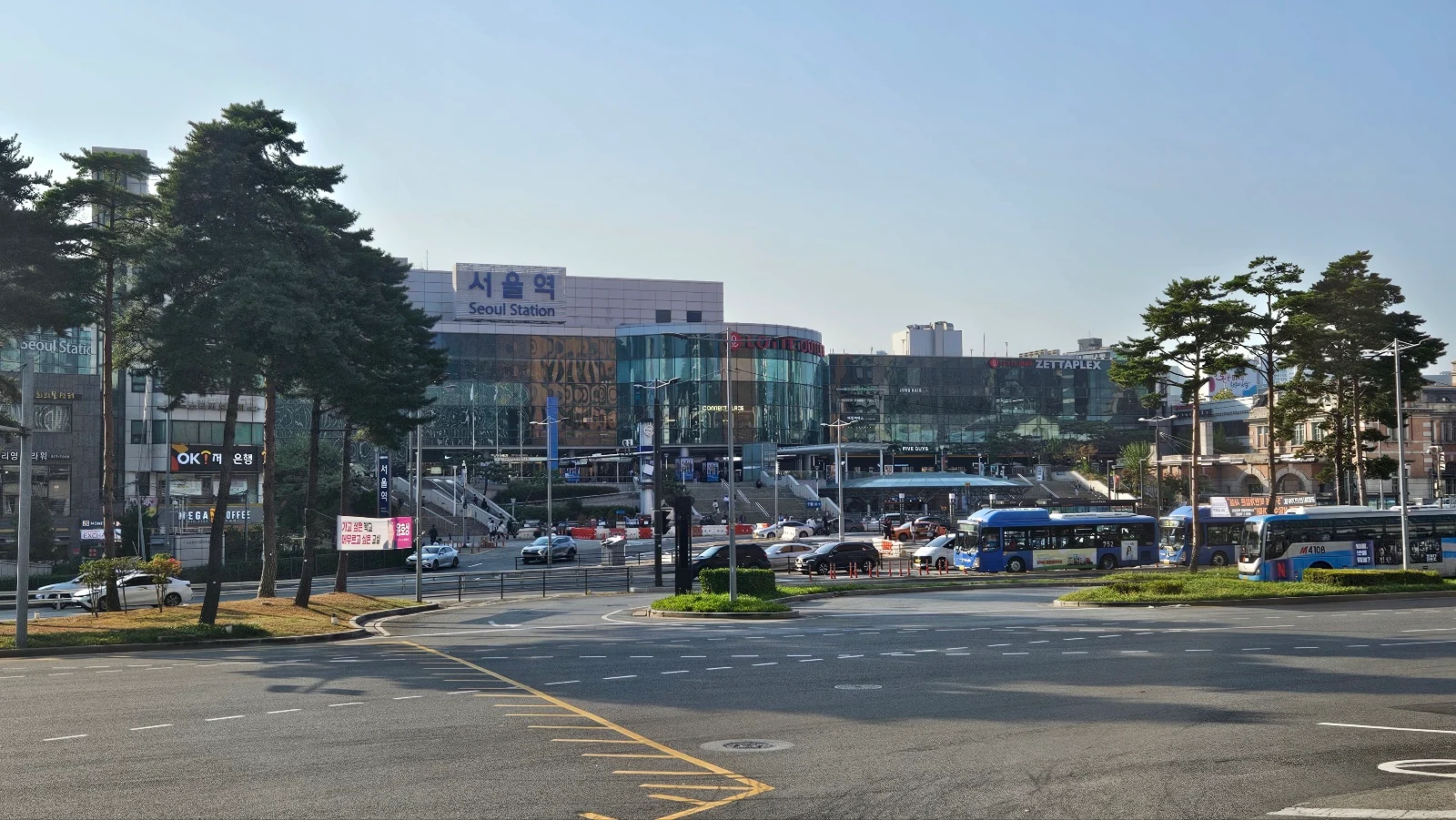
First identify the place name, then choose the exit. Large roads, rail tracks and multiple station halls make a wrong surface exit inconvenient. Save the destination’s Korean name and road address in NAVER Map, and compare its recommended exit with the signs in your current operator zone.
For a taxi, follow the signed taxi rank rather than requesting a pickup from an underground corridor. At a large station, the driver’s road level and side of the building matter. Put the pin at the actual curb where you will wait and send the Korean destination name if messaging is available.
Five mistakes that cost the most time
- Following an exit number without its line or operator. Exit numbering is not a universal coordinate for the whole complex.
- Confusing KTX with the airport railroad. Both use train symbols but lead to different halls and ticket systems.
- Assuming every AREX train is the same. Check Express versus All-Stop and the airport terminal.
- Starting a long transfer before using the toilet. Facilities may be on the other side of a gate or level change.
- Treating Seoul Station and Yongsan Station as interchangeable. Some trains use one or both; the station printed on your ticket is decisive.
Before leaving for the station
Check the live KORAIL timetable and your ticket for the departure station, train number and time. Recheck AREX and subway service notices on the travel day. Save an offline screenshot of the Korean destination address, but use station boards for the final platform because live operations override a saved image.
Arrive with a generous buffer if the itinerary connects an airport train to an intercity service, especially with children, mobility needs or several bags. Seoul Station is manageable once you identify the correct zone; rushing is what turns one missed sign into a long detour.
Lost property and useful phone numbers
If you have just left something on a train, tell station staff immediately. Have the line, direction, approximate time, carriage or door position and a description of the item ready. The same station name can belong to several operators: contact the one whose train or station area you used.
| Who to contact | Phone in Korea |
|---|---|
| Subway Line 1 lost property · City Hall | 02-6110-1122 |
| Subway Line 4 lost property · Chungmuro | 02-6110-3344 |
| AREX lost property · Geomam | 032-745-7777 |
| KORAIL customer service · KTX / rail enquiries | 1544-7788 |
Numbers checked against operator publications on 6 October 2026: Metro centres · AREX contacts · KORAIL.
Seoul Metro’s lost-property centres for Lines 1–8 open Monday–Friday, 09:00–18:00, excluding public holidays. Other operators have their own hours. Call before travelling to a centre; recently found items may still be at a station. Have the line, time and item description ready when calling, as English-language assistance varies by operator.
These are domestic dialling numbers. From overseas, add +82 and omit the leading zero from a normal 02/031/032 number. Korean 15xx/16xx service numbers may not connect internationally. Registered items can also be searched on the police lost-property portal.
Other stations you may need
For Lotte World or Seoul Sky, use the Jamsil exit guide. Taking a coach? Check the Express Bus Terminal guide before choosing a hall. If your rail ticket says Yongsan, follow the Yongsan KTX and ITX guide instead of assuming departure from Seoul Station.
The final station matters as much as the airport train. Use the individual guides for Hongik University / 홍대입구 · Gimpo Airport / 김포공항 · Myeongdong / 명동 · Gangnam / 강남.