
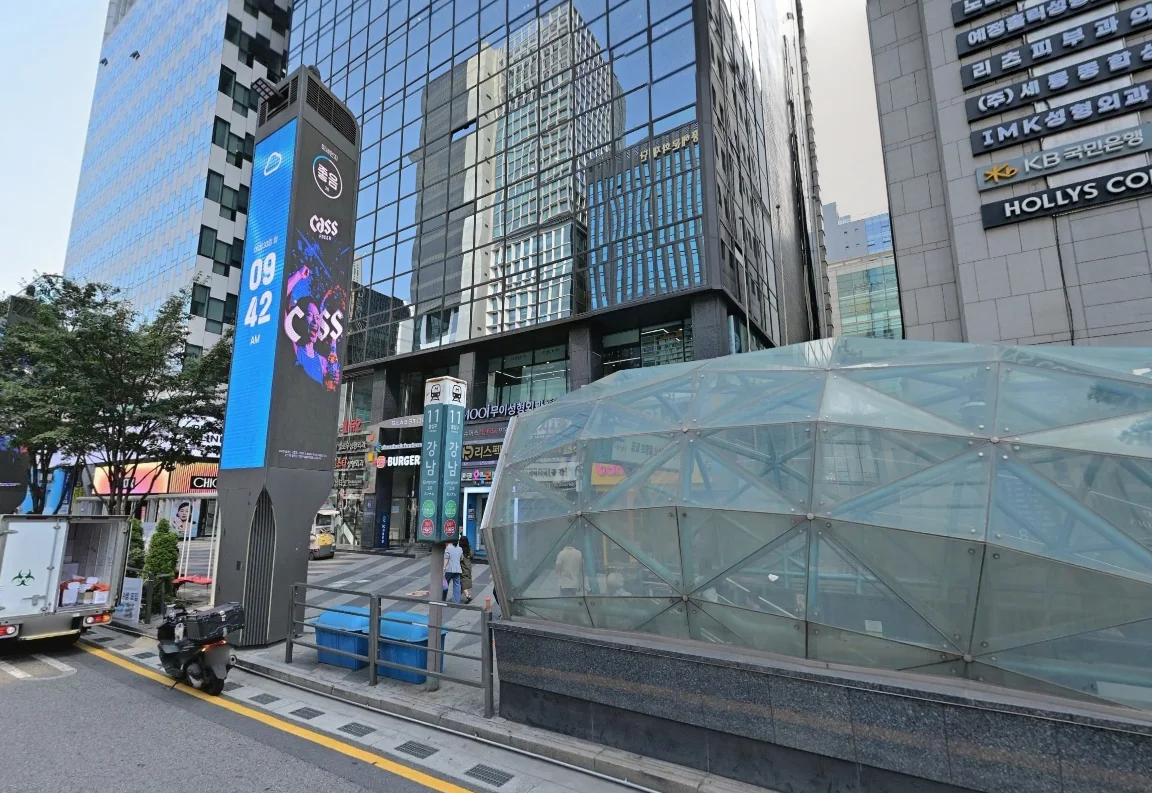
“Gangnam” is a big area, not one station
강남역 / Gangnam Station connects Line 2 and the Shinbundang Line. It is not a Line 9 station. If your itinerary mentions Line 9, read the station name carefully rather than getting off wherever “Gangnam” appears.
Sinnonhyeon / 신논현역 is a separate station on Line 9 and Shinbundang. Samseong / 삼성역, also on Line 2, serves a different part of the wider Gangnam area. A hotel or clinic using “Gangnam” in its name may be closer to either of those—or another station altogether. Put the building’s Korean street address into a journey planner before deciding where to get off.
Station layout: exits, floors and elevators
The Line 2 diagram shows Exits 1–12 and the connection to the Shinbundang concourses and platform. Check both your line and the elevator route before heading to street level.
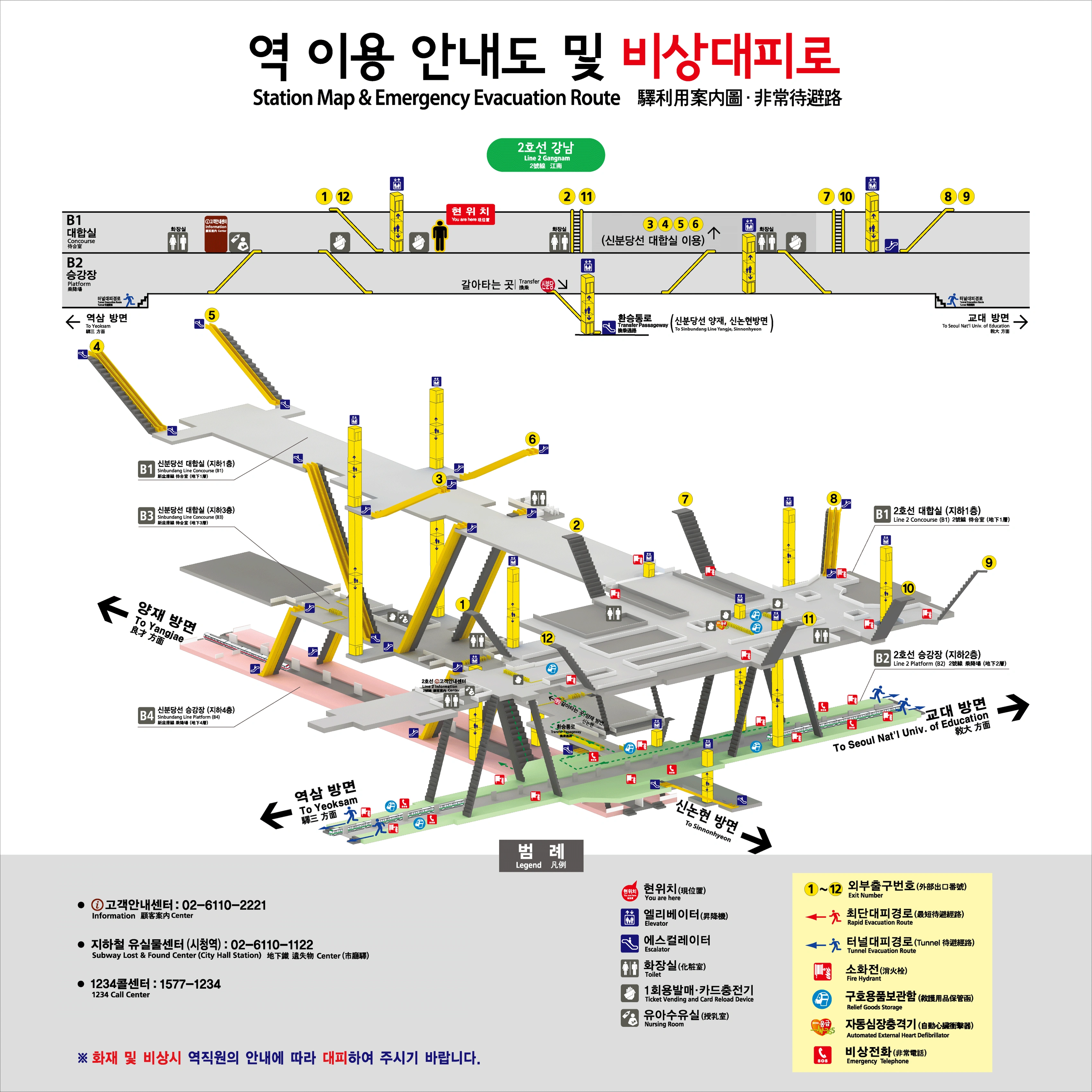
Open the full-size station map ↗
“You are here” marks the original sign location, not your live position. Follow current signs and staff instructions; use a live journey planner for train times.
Pick the line before the exit
| What you need | Follow | Check once more |
|---|---|---|
| Another Line 2 stop | Green Line 2 / 2호선 signs | The next stations in your chosen direction |
| A Shinbundang stop | Shinbundang / 신분당선 signs | Direction, transfer gate and fare |
| Line 9 | A route via a Line 9 interchange | Gangnam Station itself has no Line 9 platform |
| Your hotel, café or appointment | The Korean building address | Street side, entrance and any stairs |
The most useful question is not “Which is Gangnam’s best exit?” It is “Which exit puts me on the right side for this address?” The roads around the station are substantial, so the closest-looking staircase is not always the easiest route to the front door.
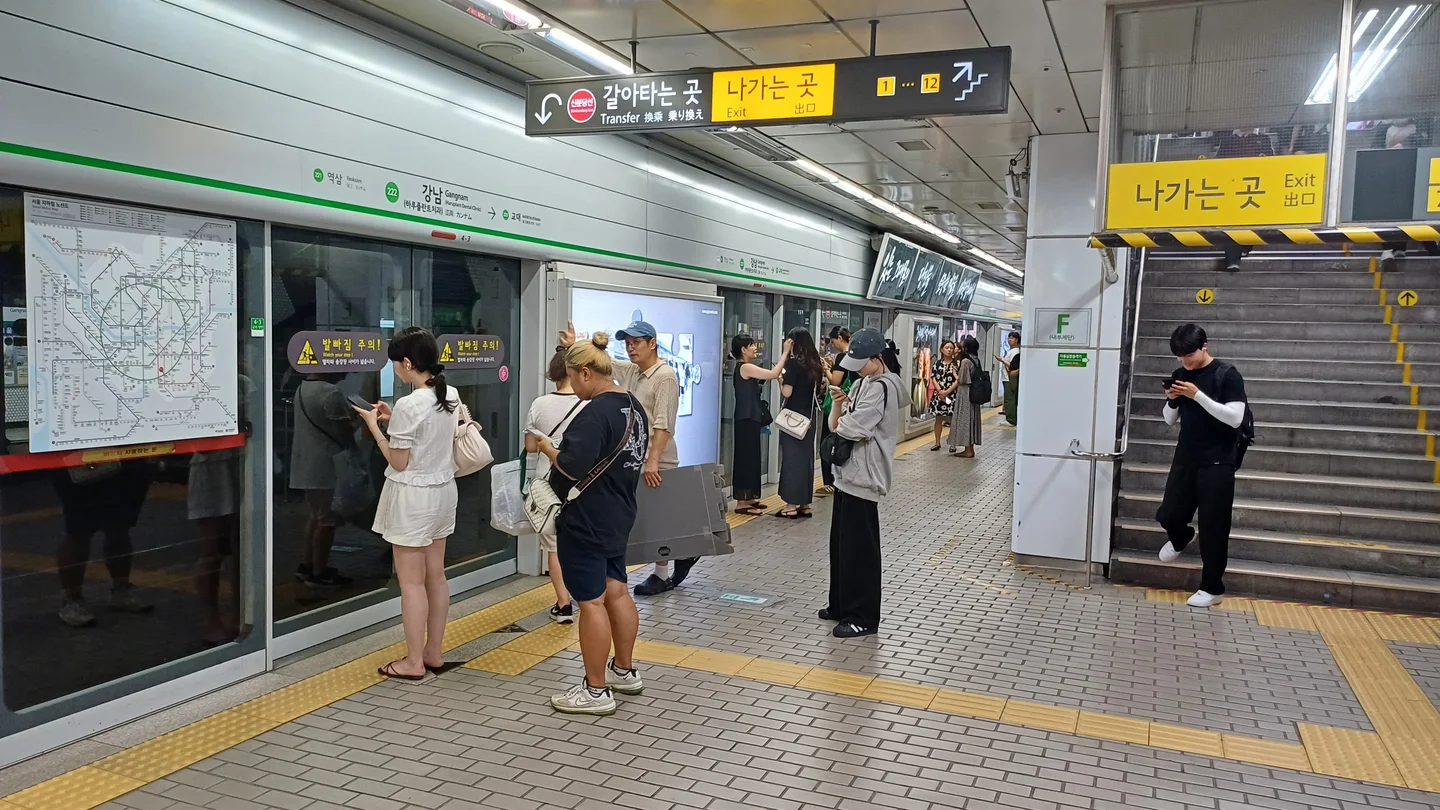
Shinbundang has its own fare rules
Shinbundang charges an additional, section-based fare on top of the standard subway fare. Use the same transit card throughout the journey, check its balance, and read the indicated direction before passing the Shinbundang gate.
For a single-use ticket that does not include the Shinbundang component, the operator instructs passengers to settle the additional fare at the transfer-passage machine. Ask station staff if the gate rejects your ticket; repeatedly tapping it does not resolve a missing fare component.
The extra fare depends on which Shinbundang sections you travel through. Check the operator’s current fare calculation for your actual journey before setting off.
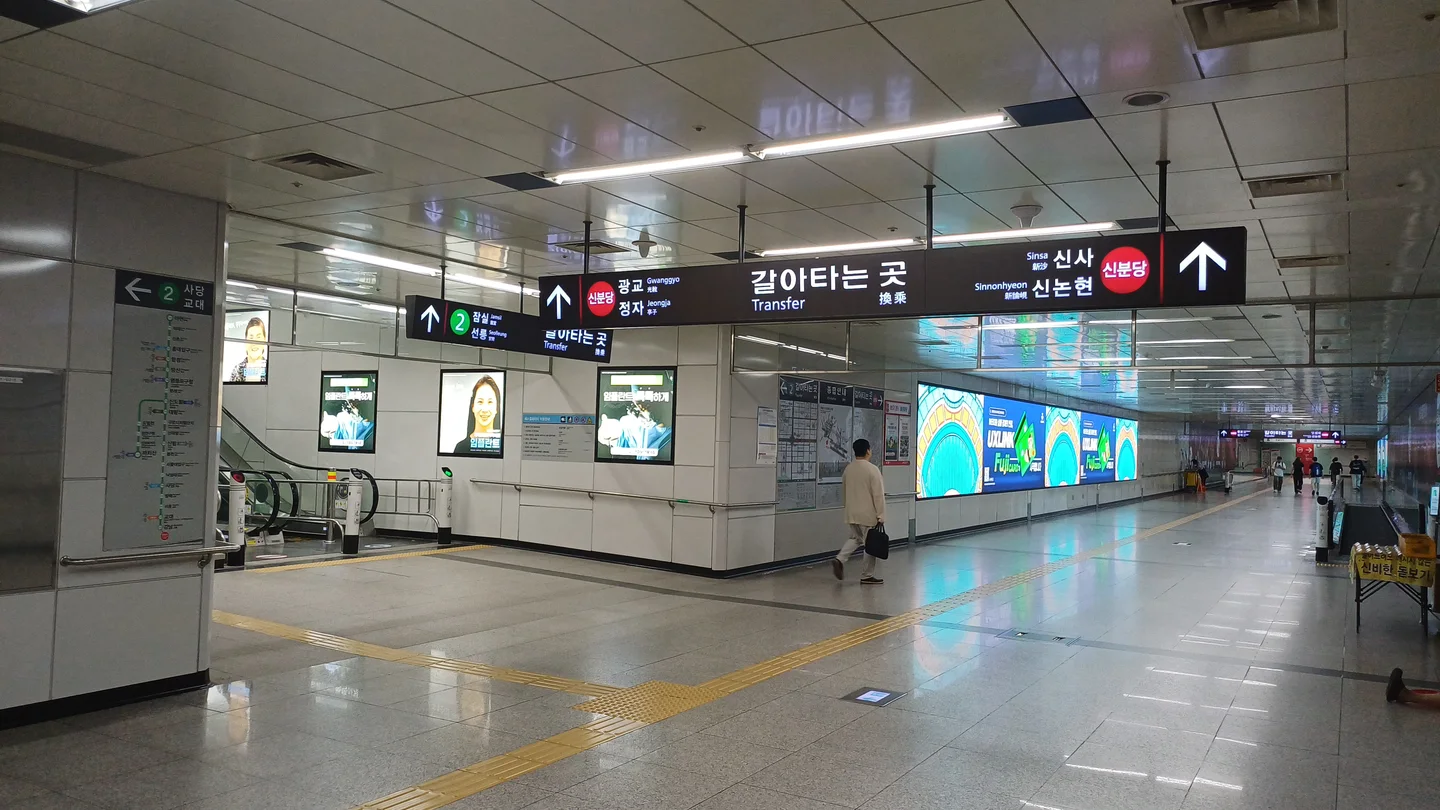
Airports: do not search for an AREX platform here
Gangnam Station has no AREX platform. A trip to Gimpo or Incheon requires a connection or another transport option. Compare the complete route from your starting address, including the walk and any changes, rather than just choosing the train with the shortest rail time.
If a route uses Line 9, remember that its interchange may be a different station from Gangnam. If it uses Hongik University and AREX, see the Hongik University transfer guide. For a flight from Gimpo, use the Gimpo terminal guide and check domestic versus international.
Toilets, elevators and a realistic meeting point
Use the facility diagram in your current line’s concourse for the nearest toilet or lift. Do not assume a numbered exit has an elevator, or that a toilet is on your side of the fare gates. For a step-free route, show 엘리베이터 to station staff and your destination address if you need help choosing the surface side.
Agree on a precise meeting point: an exit number plus the street-level landmark, not just “Gangnam station.” Do not wait in front of ticket gates or stop at the top of an escalator. Move aside before checking your map or messaging someone.
Before you head downstairs
Check the destination’s Korean address in NAVER Map, the line and direction, and the last usable connection for your trip. For payments and card balance, see the Korea transit payment guide.
If you need somewhere for a large bag, ask your hotel about storage or check the size and access hours of any lockers you find at the station. Choose the exit for the building you are visiting, and keep the route back to your next train handy.
Lost property and useful phone numbers
If you have just left something on a train, tell station staff immediately. Have the line, direction, approximate time, carriage or door position and a description of the item ready. The same station name can belong to several operators: contact the one whose train or station area you used.
| Who to contact | Phone in Korea |
|---|---|
| Line 2 lost property · City Hall | 02-6110-1122 |
| Shinbundang customer service / lost-property enquiries | 031-8018-7777 |
Numbers checked against operator publications on 6 October 2026: Metro centres · Shinbundang.
Seoul Metro’s lost-property centres for Lines 1–8 open Monday–Friday, 09:00–18:00, excluding public holidays. Other operators have their own hours. Call before travelling to a centre; recently found items may still be at a station. Have the line, time and item description ready when calling, as English-language assistance varies by operator.
These are domestic dialling numbers. From overseas, add +82 and omit the leading zero from a normal 02/031/032 number. Korean 15xx/16xx service numbers may not connect internationally. Registered items can also be searched on the police lost-property portal.